In the wave of Industry 4.0, "Predictive Maintenance" (PdM) has become a crucial method for manufacturing enterprises to improve efficiency. However, reality is often more challenging than the concept: according to industry research, although many companies have deployed sensors and monitoring equipment, the proportion that truly achieves data-driven maintenance decisions still needs improvement. Many factories, even equipped with advanced oil spectral analysis devices, find that if the generated reports lack in-depth interpretation, equipment often remains stuck in the passive situation of "repair after failure."
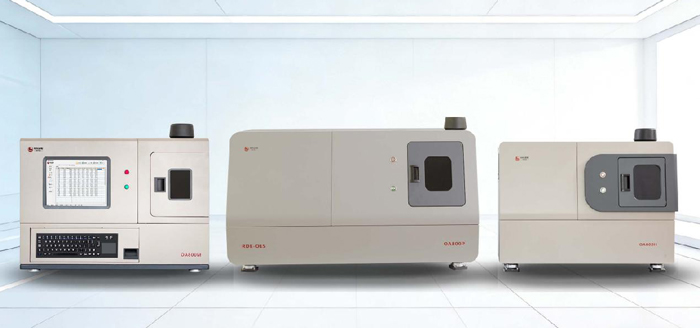
Why is it difficult to drive decisions even with data? It's like a patient receiving a lab report but lacking a professional doctor to make a diagnosis. To truly transform spectral data into actionable maintenance instructions, we must cross three key "gaps."
1. Breaking Data Silos: From "Single-Point Detection" to "Multi-Dimensional Fusion"
Spectral data is often a static snapshot. For example, an increase in iron (Fe) content in oil could indicate gear wear or external contamination. Without auxiliary verification from equipment operating hours, load conditions, or vibration data, relying solely on a single data point can easily lead to misjudgment.
Solution: Build a multi-source data fusion mechanism. Correlate oil spectral data with vibration analysis, temperature monitoring, and other data. Practice shows that a diagnostic mode integrating multiple technologies helps improve judgment accuracy. Only by allowing oil data to "communicate" with equipment operating conditions can we accurately locate the real source of the problem.
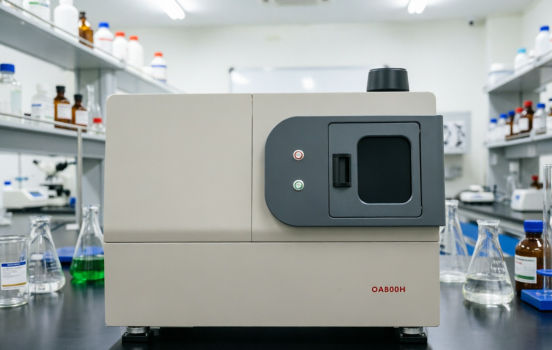
The DITEE OA800H Oil Spectrometer not only rapidly determines various elements according to relevant standards (such as ASTM D6595) but also possesses open data interface capabilities. It can adapt to industrial site environments and conveniently connect high-precision oil analysis results to existing enterprise equipment management systems, helping to build a comprehensive "equipment health profile" and break down data silos.
2. Dynamic Threshold Management: From "Static Red Lines" to "Trend Warning"
Many enterprises follow static alarm values set by equipment manufacturers (e.g., alarm if iron content > 100ppm). However, this ignores the "individual differences" and "lifecycle" of equipment. The metal content of an old device might be in a dynamic balance, while a slight sudden increase in a new device could be a crisis signal.
Solution: Promote dynamic trend analysis. According to industry principles (such as ISO 13381-1), focus on the rate of change in element concentration rather than absolute values. If the concentration of a certain element shows an abnormal doubling within a short period, even if it hasn't reached the preset red line, a warning should be triggered to intervene and inspect early.
The DITEE OA800H supports flexible analysis channel settings and historical data export. Paired with professional analysis software, the system can automatically record and plot trend curves of element concentrations, helping engineers shift from "looking at numbers" to "looking at trends," identifying potential abnormal fluctuations, and achieving a transformation from passive response to active prevention.
3. Human-Machine Collaboration: From "Data Display" to "Actionable Recommendations"
Data itself does not speak; it requires professional knowledge to give it meaning. Relying entirely on algorithms while ignoring the experience of lubrication engineers is a major difficulty in implementation.
Solution: Establish a collaborative mode of "Intelligent Tools + Expert Experience." Analysis software should be able to translate complex spectral data into intuitive maintenance suggestions (such as "suggest checking bearing wear" or "monitor filter condition") rather than just listing ppm values.
The intelligent analysis system equipped with the DITEE OA800H aims to become a "digital assistant" for engineers. It not only provides high-precision element analysis but also assists technicians in making quick judgments through intuitive report presentation. By combining equipment operation history with an expert knowledge base, the system helps reduce unplanned downtime, ensuring data truly serves maintenance decisions.
Spectral data is not the endpoint but the starting point for equipment health management. DITEE, through its advanced OA800H oil spectrometer, is committed to placing data within specific industrial contexts, combining dynamic trends with professional expertise to help enterprises truly achieve "treating diseases before they arise." The implementation of predictive maintenance does not depend on how expensive the equipment is, but on the smooth flow of data and the closure of the decision-making chain.




 Overseas Sales Manager:
 Company Address: 5th Floor, Building 7, LianDong U Valley Guangzhou Nansha International Enterprise Park, Zhixin 1st Road, Dagang Town, Nansha District, Guangzhou, China, 511455
 Working Time:9:00-18:00 (GMT+8), Monday to Friday


